
Despite the influx of new technologies and smart infrastructure, the most persistent threats to reliability remain stubbornly familiar: aging infrastructure, increasingly severe weather events, demand growth and the evolving nature of the grid.
While upgrading equipment and deploying advanced sensors can certainly help, utilities don’t need to wait for full-scale modernization to make meaningful progress.
In fact, a recent audit by the Michigan Public Service Commission identified 75 specific recommendations for local utilities to improve reliability—many of which focus on better use of existing data and operational practices.
Nationally, utilities are already investing heavily in infrastructure. U.S. electric utilities spent more than $50 billion in 2023 on distribution system upgrades, according to the American Society of Civil Engineers. Nearly $28 billion was also spent on transformer replacements. That number is projected to jump to $32 billion in 2026.
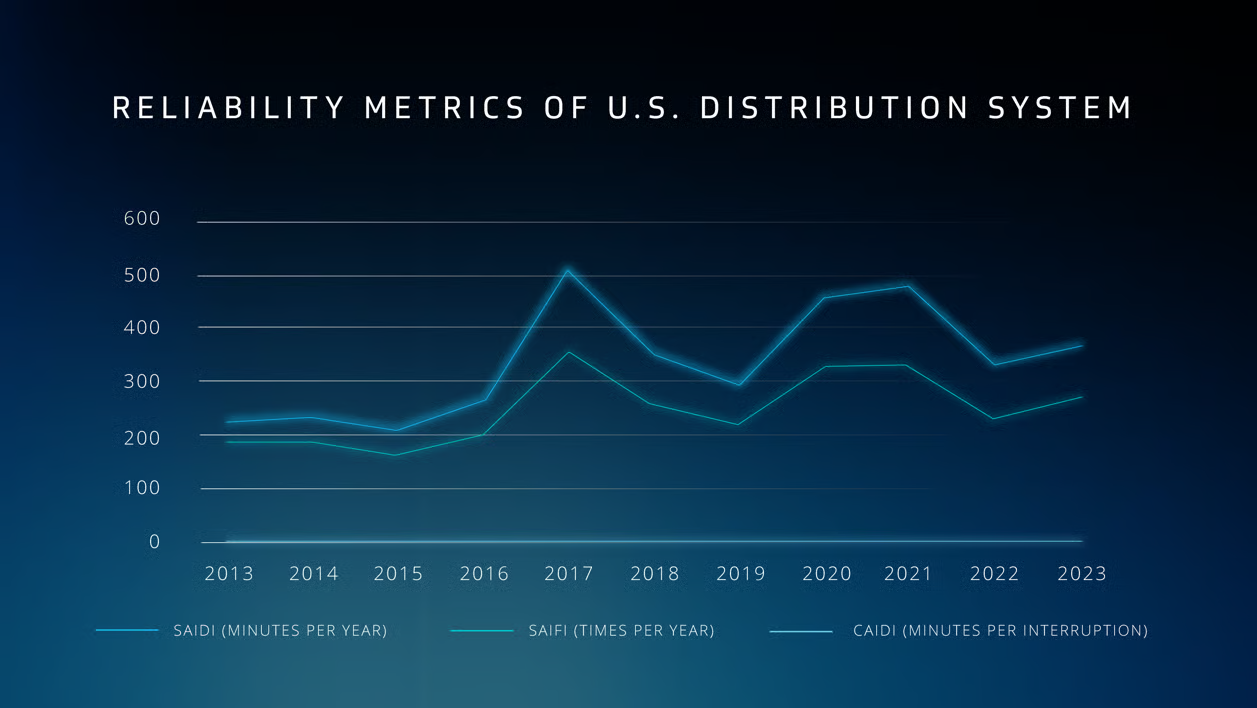
Yet, despite these investments, reliability metrics have remained relatively flat in recent years after coming down from all-time highs, according to the U.S. Energy Information Administration’s most recent annual report.